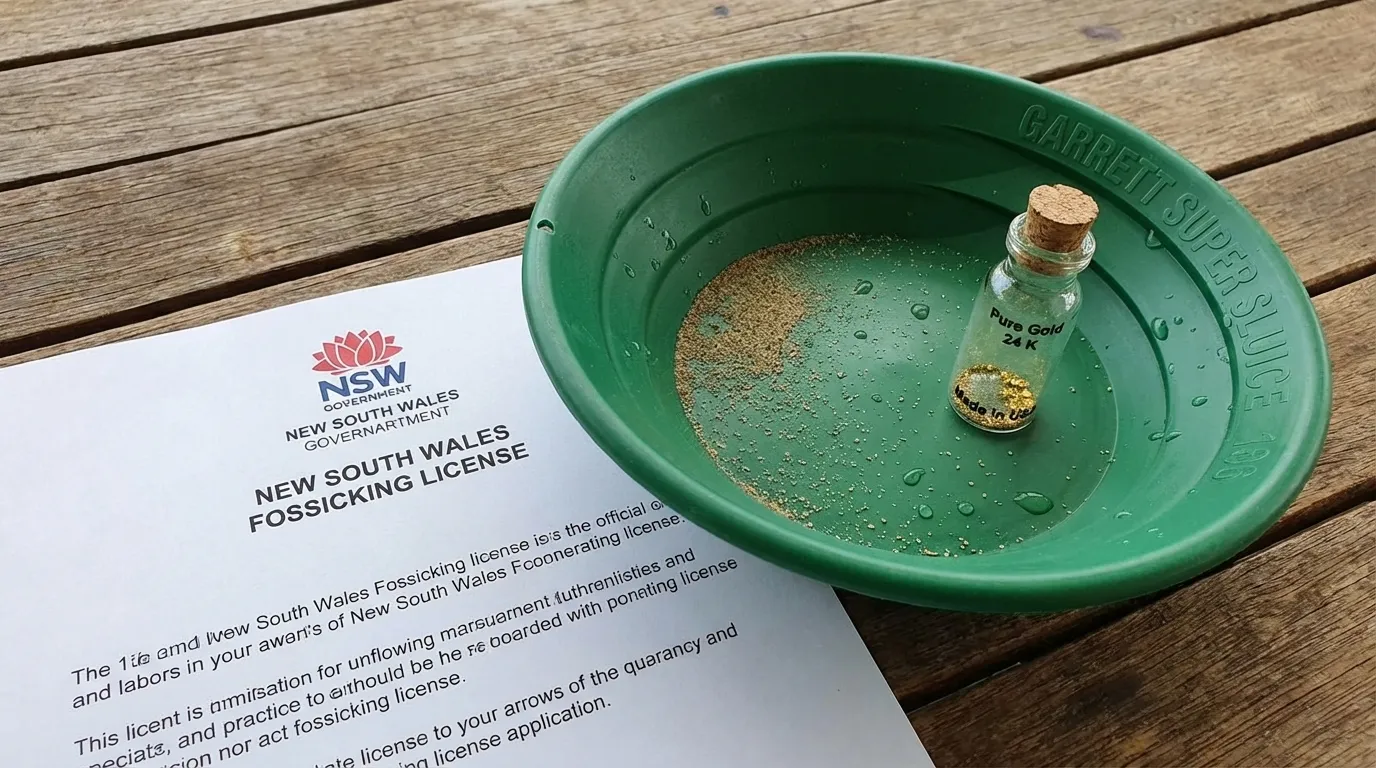
NSW Fossicking Licence Complete Guide: Laws, Permits and Regulations
Everything you need to know about fossicking licences in NSW. Learn about requirements, costs, legal fossicking areas, and compliance for gold prospecting.
NSW Fossicking Licence Complete Guide: Laws, Permits and Regulations
Understanding the legal requirements for gold prospecting in New South Wales is essential for anyone interested in recreational fossicking. NSW has a well-established regulatory framework that balances fossicking opportunities with environmental protection and heritage conservation. This comprehensive guide explains everything you need to know about fossicking licences, legal requirements, and compliance to ensure your prospecting adventures remain both productive and lawful.
Understanding NSW Fossicking Laws
What is Fossicking?
In New South Wales, fossicking is legally defined as the activity of searching for and removing minerals, gemstones, or fossils for recreational purposes only – not for commercial gain. The term specifically applies to:
- Surface collection of minerals and gemstones
- Small-scale digging and excavation
- Metal detecting for minerals (not just buried treasure)
- Panning and sluicing in designated waterways
- Using hand tools to extract mineral specimens
Importantly, fossicking is distinguished from mining, which involves larger-scale operations, mechanical equipment, and commercial intent. Understanding this distinction is crucial because different regulations and permits apply to each activity.
The Legal Framework
NSW fossicking regulations are primarily governed by:
Mining Act 1992: This legislation provides the overarching framework for all mining and fossicking activities in NSW. It establishes the legal basis for fossicking licences and defines where fossicking may occur.
Mining Regulation 2016: This regulation provides detailed requirements for fossicking, including specific conditions, restrictions, and compliance obligations.
Crown Land Management Act 2016: Governs fossicking on crown lands and reserves, establishing additional requirements for activities on public land.
National Parks and Wildlife Act 1974: Prohibits fossicking in most national parks and wilderness areas unless specifically designated for such activities.
Heritage Act 1977: Protects historic sites and artifacts, making it illegal to disturb heritage items during fossicking.
Understanding these laws helps prospectors navigate the legal landscape and avoid unintentional violations.
NSW Fossicking Licence: The Basics
Who Needs a Licence?
A NSW fossicking licence is required for:
- Anyone fossicking on crown land (land owned by the state)
- Prospectors searching for minerals on designated fossicking areas
- People using metal detectors to search for minerals on public land
- Those collecting mineral specimens from legal fossicking locations
Exemptions: You do NOT need a fossicking licence when:
- Fossicking on private land with the landowner’s written permission (though a Miner’s Right may apply)
- Collecting non-mineral items like shells on beaches
- Searching for lost property with a metal detector (not mineral prospecting)
- Collecting geological specimens in areas specifically designated for educational purposes without extraction
How to Obtain a Fossicking Licence
The process is straightforward and can be completed in several ways:
Online Application (Recommended):
- Visit the Service NSW website (service.nsw.gov.au)
- Search for “fossicking licence”
- Create an account or log in
- Complete the online application form
- Pay the licence fee by credit card
- Receive your licence number immediately
- Download and print your licence certificate
In-Person Application:
- Visit any Service NSW centre
- Bring identification (driver’s licence or passport)
- Complete the application form with staff assistance
- Pay the licence fee
- Receive your licence immediately
Application Details Required:
- Full legal name
- Current address
- Contact phone number
- Email address (for online applications)
- Payment information
Licence Cost and Validity
Current Fees (as of 2025):
- Individual Fossicking Licence: $48.40 for two years
- Concession rate: Available for pensioners and seniors
Validity Period: NSW fossicking licences are valid for two years from the date of issue. You’ll receive a reminder to renew before expiration.
Family Coverage: One licence covers all members of your immediate family when fossicking together under your supervision. This includes your spouse/partner and dependent children under 18.
Licence Conditions and Restrictions
Your NSW fossicking licence comes with specific conditions you must observe:
General Conditions:
- Carry your licence or proof of licence number when fossicking
- Fossick only in designated legal areas
- Use hand tools only (no mechanical equipment)
- Limit excavations to 1 metre depth
- Fill all holes and restore the site after fossicking
- Do not disturb vegetation unnecessarily
- Remove all rubbish and foreign objects you detect
- Comply with all signs and site-specific rules
- Not engage in any commercial mineral extraction
Environmental Protection Requirements:
- Minimise environmental disturbance
- Don’t fossick within 20 metres of waterways unless specifically permitted
- Avoid disturbing native fauna and flora
- Don’t fossick during extreme fire danger periods
- Report any environmental damage observed
Heritage Protection Requirements:
- Do not disturb Aboriginal heritage sites or objects
- Do not remove or damage historical artifacts
- Report significant historical or archaeological finds to authorities
- Avoid fossicking in known heritage areas
Where You Can Legally Fossick
Crown Land Fossicking Areas
Crown lands designated for fossicking are managed by Crown Lands NSW. These areas are specifically set aside for recreational fossicking and include many of NSW’s historic goldfields.
Popular Crown Land Fossicking Areas:
Central West Region:
- Hill End and surrounding areas
- Sofala district
- Turon River system
- Ophir Reserve
- Wattle Flat fossicking area
Northern Tablelands:
- Glen Innes region (sapphire areas)
- Emmaville and surrounding district
- Tingha fossicking areas
South Coast:
- Various beaches for gem and mineral collecting
- Designated fossicking reserves near Bega and Eden
Finding Fossicking Areas:
- Check the NSW Department of Regional NSW website for current maps
- Download the “Fossicking in NSW” guide with area descriptions
- Use the NSW Spatial Viewer to identify crown land
- Contact local councils for area-specific information
- Join fossicking clubs for local knowledge
State Forests
Many NSW state forests permit fossicking, but specific rules apply:
Requirements:
- Hold a valid fossicking licence
- Obtain any required forest access permits
- Comply with forest management rules
- Avoid restricted areas during logging operations
- Follow fire restrictions and closure notices
Popular State Forest Fossicking Areas:
- Turondale State Forest
- Trunkey State Forest
- Mogo State Forest (gold and sapphires)
Always check with Forestry Corporation NSW before entering state forests, as temporary closures and restrictions apply.
Private Land
Fossicking on private land requires different arrangements:
Requirements:
- Written permission from the landowner
- A NSW Miner’s Right (separate from fossicking licence)
- Clear agreement on areas you may access
- Understanding of any landowner-imposed restrictions
- Respect for property boundaries and infrastructure
Obtaining Permission: Always approach landowners courteously and professionally:
- Contact the owner before entering property
- Explain what you’re doing and where
- Ask about any restrictions or sensitive areas
- Agree on access times and duration
- Obtain written permission (essential)
- Offer to share information about your finds
- Leave the property better than you found it
Restricted and Prohibited Areas
You CANNOT fossick in:
National Parks: Most NSW national parks prohibit fossicking. Very few parks have designated fossicking areas – always check before visiting.
Nature Reserves: Fossicking is generally prohibited in nature reserves and conservation areas.
Historic Sites: Areas protected under heritage legislation, including historic mining sites, Aboriginal heritage sites, and archaeological areas.
Private Property Without Permission: Never fossick on private land without explicit written permission.
Active Mining Leases: Areas subject to current mining leases are off-limits unless you have specific permission from the lease holder.
Environmentally Sensitive Areas: Areas with endangered species, fragile ecosystems, or environmental protection orders.
Military Land: Defence training areas and military facilities.
Water Supply Catchments: Areas designated for water supply protection.
Miner’s Right vs Fossicking Licence
Understanding the difference between these two permits is important:
Fossicking Licence
Purpose: Allows recreational fossicking on crown land Cost: $48.40 for two years Permits: Surface fossicking, metal detecting, panning on designated areas Restrictions: Crown land only (unless you also have landowner permission) Equipment: Hand tools only
Miner’s Right
Purpose: Grants broader mineral exploration rights Cost: $60.50 for five years Permits: Fossicking on private land (with permission), establishing claims, some commercial activity Additional Rights: Can peg claims, extract larger quantities, use more extensive equipment Requirements: Different application process through NSW Resources Regulator
Which Do You Need?
- Crown land fossicking only: Fossicking Licence is sufficient
- Private land fossicking: Need Miner’s Right AND landowner permission
- Serious prospecting with commercial potential: Consider Miner’s Right
- Casual weekend prospecting: Fossicking Licence is usually adequate
Many serious prospectors hold both permits for maximum flexibility.
Equipment Regulations
Permitted Equipment
With a fossicking licence, you may use:
Detection Equipment:
- Metal detectors of any type
- Ground-penetrating radar (for locating targets)
- GPS devices for navigation
Digging Tools:
- Picks and mattocks
- Hand shovels and spades
- Trowels and hand diggers
- Crevicing tools
- Hand-operated post hole diggers
Processing Equipment:
- Gold pans
- Hand-operated sluice boxes
- Dry washers (hand-operated)
- Hand-operated spiral wheels
- Classifiers and screens
- Hand-operated highbankers
Support Equipment:
- Buckets and containers
- Sample bags
- Magnifying equipment
- Gold vials and collection bottles
Prohibited Equipment
You MAY NOT use:
Mechanical Equipment:
- Mechanical excavators or earthmoving equipment
- Motorised drills or augers (beyond small battery-powered drills for detecting)
- Mechanical processing plants
- Motorised pumps (in most fossicking areas)
- Explosives or chemical extraction methods
Restricted Equipment: Some areas may restrict additional equipment types. Always check site-specific regulations.
Depth Restrictions
Fossicking licences generally limit excavations to:
Standard Limit: 1 metre depth maximum without additional permits
Rationale: This depth limit:
- Protects underground infrastructure
- Prevents dangerous excavations
- Limits environmental disturbance
- Distinguishes fossicking from mining
Exceptions: Deeper excavation requires:
- An exploration licence
- Assessment certificate
- Additional environmental approvals
Compliance and Enforcement
Authorized Officers
Several agencies have authority to check compliance:
NSW Resources Regulator Inspectors: Primary enforcement authority for mining and fossicking regulations.
Crown Lands Rangers: Enforce regulations on crown land fossicking areas.
NSW Police: Can enforce fossicking laws and issue fines for violations.
National Parks and Wildlife Service Rangers: Enforce regulations in national parks and conservation areas.
Forestry Corporation Officers: Enforce rules in state forests.
Your Obligations During Inspection
When approached by an authorized officer:
Immediate Requirements:
- Stop fossicking activities
- Remain polite and cooperative
- Produce your fossicking licence or licence number
- Provide identification when requested
- Allow inspection of your equipment
- Explain your activities honestly
Officers Can:
- Request your licence and identification
- Inspect your equipment
- Examine your finds
- Check the area you’ve been working
- Ask about your activities and plans
- Take photographs for evidence
- Issue warnings or infringement notices
What to Do If You Can’t Produce Your Licence:
- Provide your licence number if you remember it
- Explain that you have a valid licence but don’t have the physical document
- Provide contact details for follow-up verification
- Be cooperative and honest
Officers can verify your licence electronically, so not carrying the physical document isn’t automatically an offence, though it’s strongly recommended to have proof with you.
Penalties for Non-Compliance
Violations of fossicking regulations can result in:
Infringement Notices (on-the-spot fines):
- Fossicking without a licence: $500
- Fossicking in prohibited areas: $500-$2,200
- Damaging the environment: $500-$2,200
- Failing to restore fossicking sites: $500
- Using prohibited equipment: $500-$1,100
Court-Imposed Penalties: For serious or repeated violations:
- Fines up to $5,500 for individuals
- Fines up to $11,000 for corporations
- Licence cancellation or suspension
- Equipment seizure
- Criminal records for serious breaches
Additional Consequences:
- Banned from specific fossicking areas
- Difficulty obtaining future licences
- Liability for environmental remediation costs
- Heritage damage penalties (separate and severe)
Common Violations to Avoid
Fossicking Without a Licence: Always maintain a current licence. Check expiry dates and renew promptly.
Trespassing: Never assume land is public. Always verify you’re on legal fossicking land.
Leaving Holes Unfilled: Fill and restore all excavations. This is both a legal requirement and ethical obligation.
Disturbing Heritage Sites: If you encounter historical artifacts or Aboriginal objects, stop digging and report your find.
Using Prohibited Equipment: Stick to hand tools only. Motorised equipment requires different permits.
Exceeding Depth Limits: Don’t dig deeper than 1 metre without appropriate additional permits.
Environmental Damage: Minimise vegetation disturbance and avoid waterway contamination.
Taking More Than Allowed: Fossicking permits small-scale collecting only, not commercial extraction.
Best Practices for Legal Compliance
Before You Go
Planning Checklist:
- Verify your fossicking licence is current
- Research your intended location thoroughly
- Download maps showing legal fossicking areas
- Check for temporary closures or restrictions
- Review fire danger ratings and weather forecasts
- Inform someone of your plans and expected return
Area Verification:
- Use the NSW Spatial Viewer to confirm land tenure
- Contact the local Department of Regional NSW office
- Check with fossicking clubs familiar with the area
- Look for signage indicating fossicking permissions or restrictions
- Verify any additional permits required (forest access, etc.)
While Fossicking
During Your Trip:
- Carry your fossicking licence or a photo of it
- Keep a record of your licence number in your phone
- Observe all site-specific rules and signage
- Respect private property boundaries
- Fill holes as you go, not at the end of the day
- Collect all rubbish, including bottle tops and other trash
- Avoid disturbing vegetation unnecessarily
- Be courteous to other fossickers
- Report any environmental concerns or illegal activity
After Your Trip
Post-Fossicking Obligations:
- Ensure all holes are completely filled
- Remove all equipment and belongings
- Dispose of rubbish properly
- Report any significant finds or heritage discoveries
- Document your trip for future reference
- Share information about closures or issues with relevant authorities
Additional Permits and Considerations
Aboriginal Heritage
NSW has strong protections for Aboriginal heritage:
Legal Requirements:
- Never disturb Aboriginal sites or objects
- Report discoveries of Aboriginal artifacts to Heritage NSW
- Avoid known Aboriginal heritage areas
- Be alert for stone tools, scarred trees, rock art, and middens
Penalties: Aboriginal heritage violations carry severe penalties, including:
- Fines up to $550,000 for individuals
- Fines up to $1.1 million for corporations
- Possible imprisonment for serious violations
Historic Heritage
Similarly, historic heritage receives protection:
Protected Items:
- Historic mining equipment and artifacts
- Colonial-era objects and structures
- Items over 50 years old with historical significance
Your Obligations:
- Don’t remove or disturb historic artifacts
- Report significant discoveries to Heritage NSW
- Photograph items in situ before reporting
Environmental Considerations
Endangered Species: Be aware of threatened species in your fossicking area. Disturbance of endangered fauna or flora habitat can result in serious penalties.
Bushfire Safety: On total fire ban days:
- Do not use metal detectors or create sparks
- Avoid driving off formed roads
- Cancel fossicking trips when conditions are extreme
Water Quality: When fossicking near waterways:
- Don’t contaminate water with sediment
- Avoid disturbing stream banks
- Don’t introduce pollutants or chemicals
Frequently Asked Questions
Can I fossick with my metal detector on beaches?
Beach fossicking regulations vary by location. Some beaches permit metal detecting for lost property, but fossicking for minerals may require a licence even on beaches. Check with local council and Crown Lands NSW for specific beach regulations.
What if I find something valuable?
Fossicking licence holders may keep minerals and gemstones they find (subject to quantity limits). However:
- Exceptionally valuable finds may trigger additional scrutiny
- Commercial quantities may require different licensing
- Some minerals are restricted (e.g., uranium)
- Report significant discoveries to maintain good relationships with authorities
Can children fossick without their own licence?
Children under 18 fossicking under parental supervision are covered by their parent’s fossicking licence. However, adults should actively supervise children to ensure compliance and safety.
What about detecting for buried treasure or coins?
Detecting for non-mineral objects (coins, jewelry, relics) has different rules:
- May not require a fossicking licence on some land types
- May require landowner permission
- Historic coins and artifacts may have heritage protection
- Local council regulations may apply
Clarify your intentions and ensure you have appropriate permissions.
Can I fossick year-round?
Generally yes, but:
- Extreme fire danger may close areas temporarily
- Some areas have seasonal closures for wildlife protection
- Wet conditions may make access impossible
- Check for temporary closures before traveling
How much gold can I keep?
Fossicking licences don’t specify exact quantity limits, but the “recreational, non-commercial” definition implies reasonable personal collecting only. Extracting commercial quantities requires appropriate mining licences.
Resources and Further Information
Key Contacts
NSW Department of Regional NSW:
- Website: regional.nsw.gov.au
- Phone: 1300 736 122
- Fossicking information and licensing
Service NSW:
- Website: service.nsw.gov.au
- Phone: 13 77 88
- Licence applications and renewals
Crown Lands NSW:
- Website: crownland.nsw.gov.au
- Information on crown land fossicking areas
NSW Resources Regulator:
- Website: resourcesregulator.nsw.gov.au
- Compliance and enforcement information
Useful Publications
“Fossicking in NSW” Guide: Comprehensive fossicking guide available from NSW Department of Regional NSW website.
NSW Spatial Viewer: Online mapping tool showing land tenure, fossicking areas, and restricted zones.
Fossicking Area Maps: Detailed maps of specific fossicking locations, available online or from regional offices.
Fossicking Organizations
Prospecting Clubs: Joining a local prospecting or fossicking club provides:
- Access to group knowledge and experience
- Organized trips to productive areas
- Training in techniques and equipment
- Networking with other prospectors
- Updated information on regulations and closures
Major clubs include:
- Central West Prospecting Club
- Newcastle Prospecting Club
- Sydney Prospecting Club
- Various regional metal detecting clubs
Conclusion
Understanding and complying with NSW fossicking laws ensures your prospecting activities remain legal, ethical, and sustainable. The NSW fossicking licence system provides accessible, affordable recreational fossicking opportunities while protecting the environment, heritage sites, and landowner rights.
By obtaining your fossicking licence, researching your fossicking locations, using appropriate equipment, and following regulations, you can enjoy this rewarding hobby with confidence. The small investment in a fossicking licence provides peace of mind and legal protection, allowing you to focus on the excitement of discovery.
Remember that regulations occasionally change, so stay informed through official channels, maintain your licence currency, and always fossick responsibly. Your compliance helps ensure that future generations of prospectors will continue to enjoy access to NSW’s remarkable fossicking areas.
Whether you’re searching for your first color at Hill End, exploring the gem fields of Glen Innes, or detecting along the Turon River, your valid fossicking licence is your key to legal, responsible, and rewarding prospecting adventures throughout New South Wales.