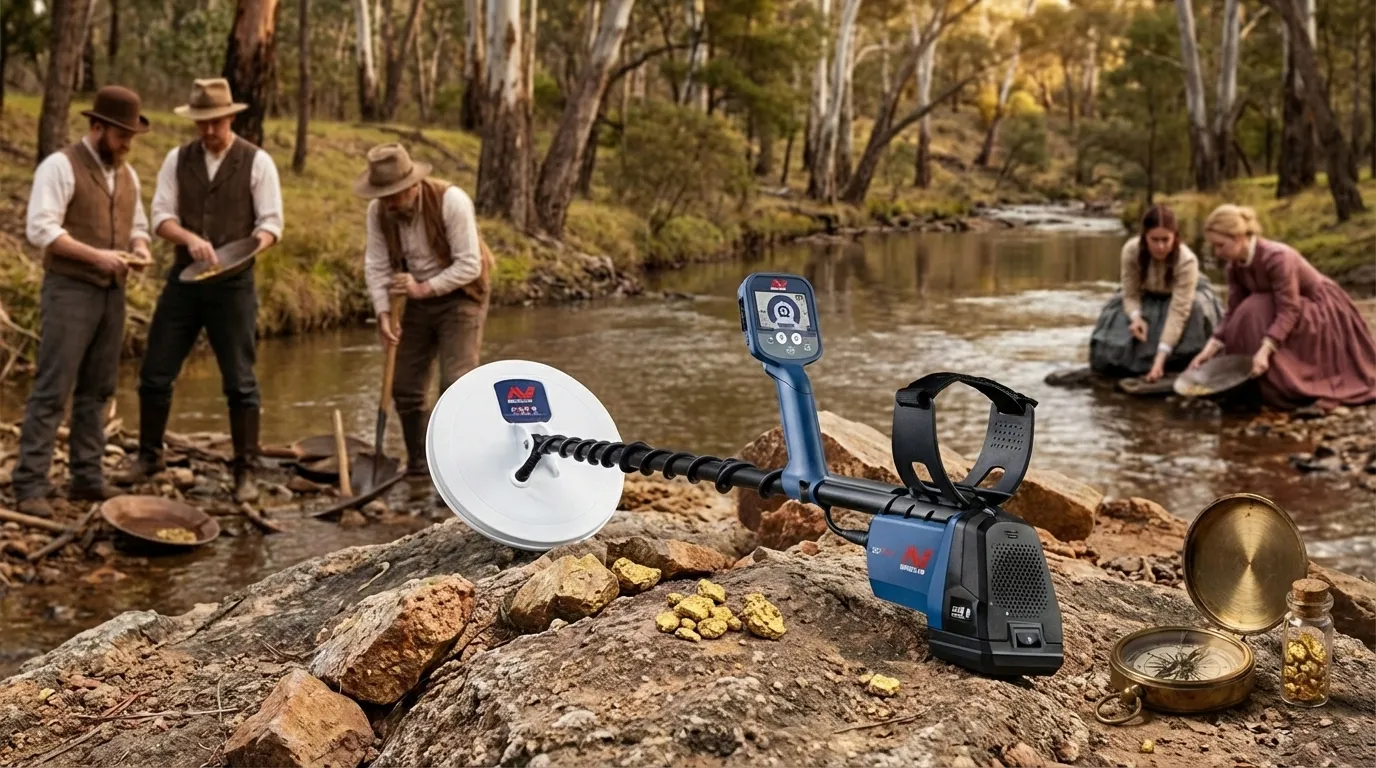
Bendigo Goldfields Metal Detecting Guide: Tips, Locations and Techniques
Expert guide to metal detecting gold in the Bendigo goldfields. Learn productive locations, best techniques, equipment recommendations, and insider tips for finding gold.
Bendigo Goldfields Metal Detecting Guide: Tips, Locations and Techniques
The Bendigo goldfields rank among Australia’s richest and most storied gold mining districts, having produced over 2,200 tonnes of gold since the 1850s. Today, Bendigo continues to reward metal detector users with finds ranging from small nuggets to occasionally spectacular specimens. This comprehensive guide provides everything you need to know about detecting gold in the Bendigo area, from productive locations to advanced techniques that increase your success rate.
Why Bendigo Remains Productive
Historical Mining and Modern Opportunities
Bendigo’s gold rush began in 1851, quickly transforming the area into one of Victoria’s premier gold mining centres. What made Bendigo exceptional was the combination of rich alluvial deposits and extensive deep reef mining. While alluvial miners worked the surface, companies sank shafts to extract gold from deep quartz reefs, with some mines reaching over 1,000 metres depth.
This dual mining approach means modern prospectors can target multiple gold sources:
Missed Alluvial Gold: Historical surface mining used relatively crude detection methods. Small nuggets, fine gold, and deep targets were routinely missed. Modern detectors easily find gold that was completely undetectable with period technology.
Depth Advantage: Modern pulse induction detectors can detect gold well beyond hand-digging depth. Gold that was below economic reach for historical miners is now accessible.
Reef Gold Dispersal: Deep mining operations brought gold-bearing material to the surface in mullock (waste rock) heaps. Weathering and erosion have dispersed this material, creating new detecting opportunities around old mine sites.
Overlooked Areas: Between major workings, in areas deemed uneconomical, and in locations inaccessible to early miners, gold remains discoverable.
Continuous Exposure: Erosion, land clearing, road construction, and other ground disturbance continuously expose gold that was previously buried or inaccessible.
Notable Modern Finds
Bendigo continues producing significant finds for detector users:
Recent Nuggets: Prospectors regularly find nuggets ranging from a few grams to occasionally over 100 grams. While major nuggets are rare, they demonstrate that substantial gold remains.
Consistent Small Gold: Many areas produce regular small nuggets (0.1-2 grams), which accumulate quickly for patient prospectors.
Specimen Gold: Gold in quartz matrix specimens are occasionally found, particularly around reef areas. These can be both valuable and scientifically interesting.
Historic Relics: In addition to gold, detecting Bendigo often produces interesting historical artifacts, though these must be treated with appropriate heritage consideration.
Understanding Bendigo’s Gold
Geological Setting
Bendigo’s gold occurs within the Bendigo Goldfield geological province, part of the larger Lachlan Fold Belt. The gold is associated with:
Quartz Reefs: Extensive quartz reef systems running through Ordovician-age sedimentary rocks (slate, sandstone, mudstone). These reefs, formed by hydrothermal activity, contain gold that was deposited from mineral-rich fluids.
Reef Orientation: Bendigo’s major reefs trend generally north-south, with multiple parallel reef systems. Understanding reef orientation helps predict where gold may occur.
Alluvial Deposits: Weathering of gold-bearing reefs released gold into drainage systems, creating alluvial deposits in creek beds, gullies, and ancient drainage channels.
Oxidation Zone: Near-surface weathering created an oxidation zone where chemical processes sometimes concentrated gold, creating particularly rich patches.
Gold Types and Characteristics
Alluvial Nuggets: Bendigo’s famous nuggetty gold ranges from tiny pieces to substantial specimens. Characteristics include:
- Generally smooth, rounded from tumbling in water
- Pure gold color (high fineness, typically 94-96%)
- Often elongated or flattened shapes
- Can be found anywhere in old drainage systems
Reef Gold: Gold directly from quartz reefs differs from alluvial gold:
- Often angular, showing crystalline structure
- May be attached to quartz
- Sometimes occurs as fine gold in heavily mineralised quartz
- Typically found near reef outcrops or in mullock heaps
Specimen Gold: Gold in quartz matrix, prized by collectors:
- Can be more valuable than gold weight alone suggests
- Don’t crush potential specimens to extract gold
- Photograph and preserve interesting specimens
Fine Gold: While Bendigo is known for nuggets, fine gold is also common:
- Accumulates in certain areas, particularly gullies
- Harder to detect but present in quantity
- Some detectors perform better on fine gold than others
Mineralisation Indicators
Learn to recognize signs of gold-bearing ground:
Quartz Float: White quartz pieces scattered on the surface indicate nearby reefs. Follow float uphill to source reefs.
Ironstone: Orange, red, or brown oxidised rock (gossan) frequently accompanies gold. Heavy ironstone staining suggests strong mineralisation.
Mullock Heaps: Waste rock piles from historical mining often contain small amounts of gold that modern detectors can find.
Ground Color: Yellow, orange, or red-brown soil indicates oxidation and potential gold association.
Old Workings: Historical diggings, filled shafts, and mining infrastructure indicate gold presence.
Vegetation Changes: Sometimes mineralisation affects vegetation, creating subtle changes in plant species or growth patterns.
Legal Detecting Areas
Miner’s Right Requirement
To legally detect in Victoria, you must hold a current Miner’s Right ($25.20 for 10 years). This permit allows prospecting on unreserved Crown land and designated State forests. See our comprehensive Victorian Miner’s Right guide for complete information.
Productive Legal Areas
State Forests:
Several State forests around Bendigo offer legal detecting opportunities:
Wellsford State Forest: North of Bendigo, this extensive forest encompasses several gold-bearing areas with historical mining activity.
Whipstick State Park: Northeast of Bendigo, the Whipstick offers varied terrain and proven gold potential. Multiple access points and good vehicle access make it popular.
Kamarooka State Park: Northwest of Bendigo, less pressured than some closer areas but still productive.
Greater Bendigo National Park: Some areas permit prospecting – check current park regulations carefully as rules can vary within the park.
Crown Land Areas:
Unreserved Crown land exists throughout the Bendigo district. Identifying these areas requires research:
- Use DEECA (Department of Energy, Environment and Climate Action) mapping tools
- Download Victorian goldfields maps
- Check Vicmap for land tenure information
- Consult with local prospecting clubs
Popular Detecting Localities:
Eaglehawk Area: North of Bendigo, Eaglehawk and surrounding areas have extensive old workings and continue producing gold.
Kangaroo Flat: Northwest of Bendigo, historically productive and still yielding gold to modern detectors.
Specimens Hill: Various locations around Bendigo with this name reflect historical specimen finds. Research specific areas for current access.
Jackass Flat: Southeast of Bendigo, part of the broader goldfields with good potential.
Big Hill: Several locations around Bendigo bear this name, reflecting prominent gold-bearing hills.
Restricted Areas
Cannot Detect In:
Private Property: Without explicit written permission from the landowner.
Urban Bendigo: Residential and commercial areas are off-limits for prospecting.
National Park Restricted Zones: Some areas within parks prohibit prospecting entirely.
Active Mining Leases: Commercial operations hold exclusive rights to their lease areas.
Aboriginal Heritage Sites: Legally protected with severe penalties for disturbance.
Historic Heritage Sites: Some areas have heritage protection precluding detecting.
Water Catchments: Restricted areas protecting water supply.
Temporarily Closed Areas: Fire danger, environmental protection, or management activities may temporarily close otherwise legal areas.
Always verify land tenure and access permissions before detecting.
Equipment for Bendigo Detecting
Detector Selection
Bendigo’s highly mineralised soil requires capable gold detectors:
Recommended Detector Types:
Pulse Induction (PI) Detectors: Excellent for Bendigo’s hot ground:
- Handle mineralisation well
- Good depth capability
- Find gold across size ranges
- Examples: Minelab GPX series, GPZ 7000, SDC 2300
Multi-Frequency Detectors: Some models perform well:
- Good ground balancing
- Sensitive to small gold
- More affordable than high-end PI detectors
- Examples: Minelab Equinox series, Minelab Vanquish (limited for gold)
ZVT Technology: Minelab’s GPZ 7000 uses Zero Voltage Transmission:
- Exceptional depth and sensitivity
- Handles extreme mineralisation
- Premium pricing
- Professional choice for serious prospectors
VLF Detectors: Lower frequency VLF detectors can work but struggle in hot ground:
- Require excellent ground balancing
- Less depth in mineralised soil
- Fine gold sensitivity
- Budget option for beginners
Coil Selection
Different coils suit different situations:
Large Coils (14-19 inches):
- Maximum depth
- Efficient ground coverage
- Open country detecting
- Finding larger, deeper nuggets
- Heavy and tiring over long sessions
Medium Coils (11-13 inches):
- Versatile all-round choice
- Good depth with reasonable coverage speed
- Balanced weight and performance
- Ideal for most detecting situations
Small Coils (8-10 inches):
- Trashy areas around old camps and workings
- Tight spaces between rocks and obstacles
- Better target separation
- More sensitive to tiny gold
- Limited depth
Specialty Coils:
- Elliptical coils for confined spaces
- Mono vs. DD (Double-D) coils – different characteristics
- High-frequency coils for fine gold emphasis
Many experienced prospectors carry multiple coils to suit different conditions encountered during a detecting session.
Essential Support Equipment
Must-Have:
- Quality headphones (hear faint signals)
- Pick and small shovel
- Knee pad or cushion
- Multiple spare batteries
- Gold bottle or container
- Water and snacks
- Hat and sun protection
Highly Recommended:
- GPS device or phone with GPS app
- Camera for documenting finds and locations
- Magnifying glass or loupe
- Target recovery tools (small trowel, brush)
- Battery charger and power pack
- First aid kit
Optional but Useful:
- Backup detector
- Multiple coils
- Geology hammer
- Sample bags
- Metal detector harness for heavy detectors
Detecting Techniques for Bendigo
Basic Detecting Method
Ground Balancing: Critical in Bendigo’s mineralised soil:
- Use your detector’s automatic ground balance
- Manually fine-tune if possible
- Re-balance periodically as ground conditions change
- Reduce sensitivity if detector is too noisy, then gradually increase
Coil Control:
- Keep coil level and close to ground (within 1-2 cm)
- Swing in straight, overlapping lines
- Maintain consistent height throughout swing
- Don’t swing too fast – slow and steady wins
Coverage Pattern:
- Work in straight lines or grid patterns
- Overlap swings by 50% to ensure no gaps
- Mark your starting point and direction
- Use a GPS to track areas you’ve covered
Target Investigation:
- When you get a signal, stop and check it from multiple angles
- If signal is repeatable, pinpoint the target location
- Mark the spot precisely (small rock or stick)
- Begin removing material carefully
- Check removed material and hole separately with detector
- Narrow down target location before digging deeper
- Recover target carefully
Advanced Techniques
Working Mineralised Ground:
Bendigo’s hot ground challenges many detectors:
Sensitivity Settings: Find the balance between sensitivity (to detect small/deep gold) and stability (reducing false signals):
- Start with lower sensitivity until detector runs stable
- Gradually increase sensitivity while maintaining control
- Accept some ground noise if it allows detecting deeper targets
- Different areas may require different settings
Slow Down: In difficult ground, ultra-slow detecting can separate target signals from ground noise. Patient prospectors find gold others miss.
Cross-Sweep: Check targets from multiple directions. True targets respond consistently; ground noise changes with swing direction.
Target Filtering: Learn your detector’s audio signatures:
- Gold has distinctive characteristics
- Ground noise sounds different
- Trash has recognizable patterns
- Experience is the best teacher
Grid Detection: For thorough coverage:
- Detect area in one direction (e.g., east-west lines)
- Detect same area perpendicular (north-south lines)
- Different angles reveal targets missed in first pass
- Especially effective around old workings
Working Old Mullock Heaps:
Historical waste rock piles often contain detectable gold:
Strategy:
- Detect slowly and methodically
- Work in organized pattern to ensure complete coverage
- Check both on top and around edges of heaps
- Material that has weathered and broken down is most prospective
- Dig everything in gold ground – many nuggets sound like trash
Safety: Watch for unstable ground, hidden shafts, and unstable rocks.
Permission: Some mullock heaps are on private property – ensure you have appropriate access.
Location Selection
Reading the Ground:
Success comes from detecting in the right places:
High-Probability Areas:
Old Gully Systems: Ancient drainage lines, even if dry, concentrated gold. Look for:
- Subtle depressions indicating old watercourses
- Lines of vegetation following drainage
- Areas where multiple gullies converge
- Changes in soil color or composition
Ridge Tops: Counterintuitively, some ridge tops concentrate gold:
- Ancient erosion patterns
- Wind deflation areas
- Historical working patterns indicate previous success
Around Old Workings: Near but not within dangerous areas:
- Edges of old diggings where material was scattered
- Paths and tracks where gold-bearing dirt was transported
- Areas where gold was processed (color often spilled)
- Under trees where miners rested (dropped items, spilled gold)
Quartz Reefs: Where reefs outcrop or are close to surface:
- Directly on reef structures
- Downslope from reefs where weathering released gold
- Around quartz float trails
Between Workings: Areas that seemed uneconomical historically may contain scattered nuggets that modern detectors find efficiently.
Exposed Ground: Recently disturbed areas:
- Road verges and cuttings (where legal to detect)
- Areas cleared for development (on public land)
- Erosion areas where soil has washed away
- Areas where trees have fallen, exposing roots and soil
Seasonal Considerations
Summer (December-February):
- Hot weather (often 30-40°C)
- Dry ground generally good for detecting
- Major bushfire risk – check fire danger ratings
- Most crowded period
- Detect early morning or evening to avoid extreme heat
Autumn (March-May):
- Ideal detecting weather (15-25°C)
- Stable ground conditions
- Autumn colors make bush beautiful
- Less crowded than summer
- Excellent camping weather
Winter (June-August):
- Cold weather (5-15°C, frosty nights)
- Ground moisture can affect detecting
- Far fewer prospectors (competition decreases)
- Shorter daylight hours
- Dress in layers; batteries drain faster in cold
Spring (September-November):
- Pleasant warming weather (10-22°C)
- Variable conditions, watch for weather changes
- Wildflowers bloom
- Spring rains may limit access to some areas
- Good detecting once ground dries
After Rain: Once ground dries following rain, detecting can be particularly good as moisture has settled dust and may enhance detection depth slightly.
Safety Considerations
Old Mine Workings Hazards
Shaft Dangers: Bendigo has thousands of old mine shafts:
- Many are hidden by vegetation or collapse
- Can be extremely deep (hundreds of metres)
- Ground around shafts may be unstable
- Never approach shaft edges
- Keep children under close supervision
- Stay away from fenced or signed dangerous areas
Unstable Ground: Historical workings create hidden voids:
- Ground can collapse unexpectedly
- Old timbers rot and fail
- Be alert for warning signs (depressions, cracks, subsidence)
Underground Hazards: Never enter old mines or tunnels:
- Collapse risk
- Bad air (oxygen depletion, toxic gases)
- Hidden shafts within tunnels
- Isolation if trapped
Environmental Hazards
Snakes: Common in Bendigo bush, especially warmer months:
- Watch where you place hands and feet
- Wear boots and long pants
- Be alert when moving rocks or logs
- Know snake bite first aid (compression bandage, immobilization)
- Carry compression bandage in first aid kit
Heat: Summer temperatures can be extreme:
- Carry adequate water (4+ litres per person)
- Wear sun protection (hat, sunscreen, long sleeves)
- Recognize heat exhaustion signs
- Rest in shade regularly
- Avoid midday detecting in extreme heat
Fire Danger: Bendigo faces significant bushfire risk:
- Check fire danger ratings daily during fire season
- On total fire ban days, don’t use metal detectors (potential spark risk)
- Don’t drive off formed tracks on high fire danger days
- Carry fire extinguisher in vehicle
- Know evacuation routes
- Have bushfire survival plan
Remote Area Risks:
- Tell someone your plans and expected return
- Carry mobile phone and backup battery (reception can be limited)
- Consider personal locator beacon for remote areas
- Carry maps and GPS
- Don’t prospect alone in very remote areas
Wildlife and Plants
Spiders: Be cautious around logs and old workings.
Ants: Bendigo has aggressive ants including bull ants – watch where you kneel or sit.
Poisonous Plants: Be aware of plants that cause skin irritation or are toxic.
Tips for Success
Persistence and Patience
Bendigo’s fame attracts many detectors, meaning popular areas are thoroughly worked:
Success Strategies:
- Patient, methodical detecting is essential
- Work areas others rush through
- Detect slowly – speed misses gold
- Dig all targets in gold ground
- Return to productive areas multiple times
- Don’t expect success on every trip
- Small gold adds up quickly
Research and Learning
Pre-Trip Research:
- Study historical mining records
- Review old maps showing reef locations and rich areas
- Read mining reports from the State Library Victoria
- Research recent finds (forums, social media, club information)
- Understand specific areas’ geological characteristics
Continuous Learning:
- Join prospecting clubs for shared knowledge
- Attend detector training sessions
- Practice with your detector regularly
- Learn to read ground and geology
- Study successful prospectors’ techniques
Detector Mastery
Know Your Machine:
- Read the manual thoroughly
- Practice in various conditions
- Learn all settings and their effects
- Understand your detector’s audio signatures
- Practice target recovery techniques
- Test on known targets to understand responses
Optimal Settings: Experiment to find best settings for Bendigo conditions:
- Different areas may require different settings
- Ground mineralisation varies across the goldfield
- Weather and moisture affect performance
- Keep notes on settings that work well
Etiquette and Ethics
Respect Other Prospectors:
- Don’t detect too close to others
- Don’t detect areas currently being worked
- Share information appropriately (be discrete about productive spots)
- Help other prospectors when possible
- Respect quiet hours if camping near others
Environmental Responsibility:
- Fill all holes completely
- Remove all rubbish you find
- Don’t damage vegetation unnecessarily
- Minimize disturbance
- Respect wildlife
- Follow fire restrictions absolutely
Heritage Respect:
- Don’t disturb historical structures
- Report significant historical artifacts
- Photograph heritage items in situ
- Preserve Bendigo’s goldfields heritage
- Don’t collect or remove historical artifacts
Accommodation and Services
Camping Options
State Forest Camping: Free camping available in many State forest areas:
- Basic facilities (usually none)
- Be completely self-sufficient
- Popular spots fill on weekends and holidays
- Book ahead for designated campgrounds
- Respect quiet hours and other campers
Caravan Parks: Several parks in and around Bendigo:
- Powered and unpowered sites
- Amenities blocks and facilities
- Dump points
- Easy access to town services
Bush Camping: On legal crown land where permitted:
- Completely self-sufficient required
- Follow Leave No Trace principles
- Respect fire restrictions
- Camp away from water sources
Bendigo Services
Bendigo is a major regional city with complete services:
- Multiple supermarkets
- Hardware and camping stores
- Fuel stations
- Medical facilities and hospital
- Prospecting equipment suppliers
- Detector sales and repairs
- Accommodation options
- Restaurants and cafes
Prospecting Suppliers: Several Bendigo businesses specialize in prospecting equipment, offering local knowledge along with sales and service.
Local Prospecting Community
Bendigo Prospectors Club: Active club offering:
- Regular meetings
- Group detecting trips
- Training and equipment demonstrations
- Shared knowledge and experience
- Social connections
Benefits of Club Membership:
- Learn from experienced detectorists
- Access to productive areas
- Stay updated on regulations and closures
- Make prospecting friends
- Equipment demonstrations
Documenting Your Finds
Recording Discoveries
Information to Record:
- Exact GPS coordinates of find
- Date and time
- Weather conditions
- Ground type and characteristics
- Depth of target
- Detector settings used
- Coil type used
- Weight of gold found
- Photos of find and location
Why Document:
- Learn patterns of where gold occurs
- Return to productive areas with confidence
- Understand which techniques work best
- Track your success over time
- Provide data for future reference
Photography
Take Photos:
- Gold in situ before removal
- The hole and surrounding area
- Gold after cleaning (with scale reference)
- Interesting geological features
- Specimens before and after cleaning
Photography Tips:
- Use macro mode for small nuggets
- Include scale reference (coin, ruler)
- Good lighting shows detail
- Multiple angles capture important information
Responsible Sharing
What to Share:
- General area (e.g., “Bendigo goldfields”)
- Techniques that worked
- Detector settings and equipment used
- General geological observations
What NOT to Share:
- Specific GPS coordinates of productive spots
- Detailed location descriptions that identify exact spots
- Information that will cause damage from crowding
- Details that compromise your own future success
Balance: Share enough to help others learn without destroying productive locations through overcrowding.
Conclusion
The Bendigo goldfields offer some of Australia’s best metal detecting opportunities, combining historical significance, proven gold potential, and reasonable accessibility. While the area has been worked for over 170 years, modern detectors and persistent prospecting continue yielding everything from small nuggets to occasionally substantial finds.
Success at Bendigo requires proper equipment (quality gold detector with appropriate coils), a valid Miner’s Right, understanding of local geology, sound detecting technique, and above all, patience and persistence. The area’s mineralised ground and heavy detecting pressure mean you must work methodically and thoroughly to find gold that less patient prospectors miss.
Respect for the environment, heritage, and other prospectors ensures the goldfields remain accessible for future generations. By filling your holes, removing rubbish, respecting closures, and following regulations, you help protect ongoing detecting opportunities.
Whether you’re a beginner making your first tentative swings or an experienced detector user seeking your next significant nugget, Bendigo’s goldfields offer adventure, history, and genuine discovery potential. Obtain your Miner’s Right, invest in capable equipment, learn proper technique, respect the land, and experience why prospectors have been drawn to Bendigo for more than 170 years. That next signal could be the find you’ve been seeking.