Gympie
Gold Prospecting Location around Gympie
Looking for a place to give gold prospecting a try around Gympie?
● Download a simple map that shows areas where you can go and the major roads to those locations.
● Each map is custom made, showing the absolute latest information for any given area.
● Put it on your phone, tablet or computer. No special software required and works without internet connections.
Get This Map
Enter your email and we will create and email you the latest,high-resolution map as a PDF.
We respect your privacy. Your email will not be sold or traded to others.
Known globally as 'The Town that Saved Queensland,' Gympie holds a legendary status in Australian history. The discovery of gold here in 1867 triggered a massive rush that rescued the colony of Queensland from near bankruptcy.
Situated on the Mary River, Gympie transformed from a temporary mining camp into a grand Victorian-era city. Today, it remains one of Australia's most famous goldfields, having produced over 4 million ounces of gold, and continues to attract both commercial exploration and recreational prospectors to its rich, quartz-veined landscapes.
Gympie's gold story began in September 1867 when prospector James Nash discovered alluvial gold near the site of the current Town Hall. At the time, Queensland was facing a severe economic crisis; Nash’s find sparked a frantic rush that brought thousands of miners to the region and provided the financial injection the colony desperately needed.
Unlike many other fields that relied solely on surface deposits, Gympie became famous for its deep-reef mining. The geology featured rich quartz reefs, such as the Lady Mary and the Glanmire, which required sophisticated shaft mining. The Scottish Gympie Mine eventually became one of the largest and most productive in the area, reaching depths that were revolutionary for the late 19th century.
The immense wealth generated by the goldfields is still visible in Gympie’s streetscape, which is characterized by ornate 19th-century architecture and substantial public buildings. As the 'Golden City,' it served as a major industrial hub for decades, supporting a diverse economy that eventually expanded into timber and dairy as the primary gold boom began to level off in the early 20th century.
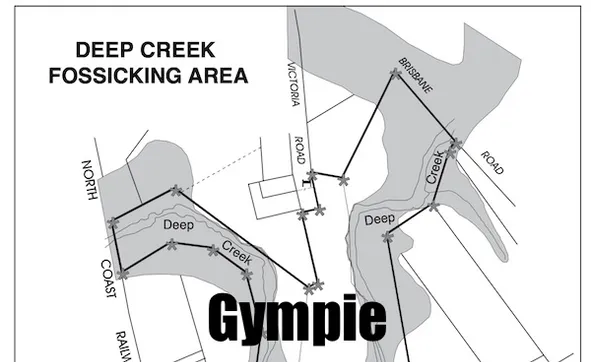
In the modern era, Gympie has seen several revivals of mining activity, most notably through the Gympie Eldorado operations which utilized modern technology to access deeper reserves. Today, the region remains highly prospective, with active exploration permits still in place. The town also embraces its heritage through the Gympie Gold Mining and Historical Museum, and the local Deep Creek area remains a designated spot for fossickers hoping to find a piece of the town’s enduring golden legacy.
Common Questions
Why is Gympie called 'The Town that Saved Queensland'? ▼
In 1867, the colony of Queensland was on the verge of bankruptcy. James Nash's discovery of gold in Gympie provided an immediate economic boost, attracting investment and population that stabilized the state's finances and ensured its future growth.
How much gold was produced in Gympie? ▼
Historically, the Gympie goldfields produced more than 4 million ounces of gold. It was one of the richest reef-mining districts in Australia, supported by massive operations like the Scottish Gympie Mine.
Can I still find gold in Gympie today? ▼
Yes, gold is still found in the region. While large-scale mining fluctuates based on commercial viability, recreational fossickers often find small nuggets and fine gold in the local creeks and designated fossicking areas using pans and metal detectors.
Where can I go fossicking in Gympie? ▼
Deep Creek is a well-known public fossicking area located near the center of town. Visitors can try their luck at gold panning in the creek bed, though it is important to check current local regulations and ensure you have the required Queensland fossicking license.