Cue
Gold Prospecting Location around Cue
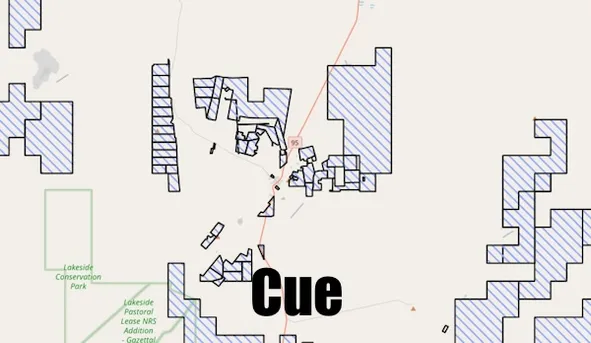
Looking for a place to give gold prospecting a try around Cue?
● Download a simple map that shows areas where you can go and the major roads to those locations.
● Each map is custom made, showing the absolute latest information for any given area.
● Put it on your phone, tablet or computer. No special software required and works without internet connections.
Get This Map
Enter your email and we will create and email you the latest,high-resolution map as a PDF.
We respect your privacy. Your email will not be sold or traded to others.
Known as the 'Queen of the Murchison,' Cue was the scene of a huge gold rush during the late 1890s. The town is now a living example of the past and present, with stunning colonial architecture and many buildings classified by the National Trust dating back to the 1890s.
Cue's grand buildings reflect the prosperity of the gold rush era when it served as one of the most important towns in the Murchison goldfield. Today, the town maintains its heritage character while serving modern mining operations and prospectors exploring the rich Murchison region.
Cue developed during the late 1890s as part of the Murchison goldfield rush. The town's location and rich gold deposits made it one of the most important settlements in this remote region, earning it the title 'Queen of the Murchison.'
During its heyday, Cue was a substantial town with grand public buildings, hotels, a brewery, churches, and extensive commercial infrastructure. The wealth generated from gold mining is evident in the impressive colonial architecture that remains today, with many buildings constructed from local stone.
The town's prosperity was supported by rich gold reefs in the surrounding area and the construction of a State Battery in 1898 to process ore from smaller miners. The railway reached Cue in the early 1900s, connecting it to the coast and facilitating the export of gold and import of supplies.
While the initial rush had passed by the 1910s, Cue survived as a service center for ongoing mining activities. Many of its historic buildings have been classified by the National Trust, making it one of the best-preserved gold rush towns in Western Australia. Modern prospecting and mining continues to be important to the local economy.
Common Questions
Why is Cue called the 'Queen of the Murchison'? ▼
Cue earned the title 'Queen of the Murchison' due to its importance as one of the largest and most prosperous towns in the Murchison goldfield during the late 1890s. Its grand architecture and status as a regional center justified this regal nickname.
What makes Cue architecturally significant? ▼
Cue has stunning colonial architecture with many buildings classified by the National Trust dating back to the 1890s. The town's historic buildings are constructed from local stone and reflect the wealth generated during the gold rush era, making it one of Australia's best-preserved gold rush towns.
When was the railway built to Cue? ▼
The railway reached Cue in the early 1900s, connecting this remote goldfield to the coast. This vital transport link enabled the efficient export of gold and the import of supplies, helping sustain the town's mining operations.
Is there still gold mining around Cue? ▼
Yes, gold mining continues around Cue today. Modern operations work the area alongside recreational prospectors, and the town serves as a service center for mining activities. The Murchison goldfield remains productive with both commercial and small-scale operations.