Kanowna
Gold Prospecting Location around Kanowna
Looking for a place to give gold prospecting a try around Kanowna?
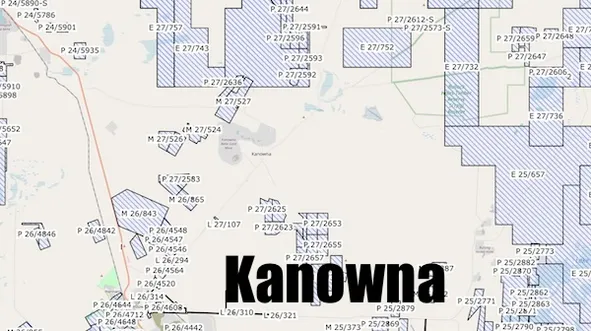
● Download a simple map that shows areas where you can go and the major roads to those locations.
● Each map is custom made, showing the absolute latest information for any given area.
● Put it on your phone, tablet or computer. No special software required and works without internet connections.
Get This Map
Enter your email and we will create and email you the latest,high-resolution map as a PDF.
We respect your privacy. Your email will not be sold or traded to others.
Kanowna has one of the most spectacular gold rush stories in Western Australia. On October 12, 1893, prospectors Pierce Larkins, Jerry McAuliffe, and Tassie O'Connor discovered gold here, allegedly picking up 300 ounces from surface gravels on their first day. The town grew almost overnight, earning its Aboriginal name meaning 'place of no sleep.'
What made Kanowna special was its rich alluvial gold deposits scattered in ancient river gravels. The population exploded from roughly 2,500 in 1897 to over 12,500 by 1899, briefly making it one of the largest towns in the colony. The field ultimately produced over 230,000 ounces of gold.
Gold was discovered at Kanowna on October 12, 1893, by prospectors Pierce Larkins, Jerry McAuliffe, and Tassie O'Connor. According to legend, on their very first day they picked up about 300 ounces of gold from surface gravels, one of the richest initial finds in the goldfields.
The location was originally called White Feather, but an Aboriginal term 'gha-na-na' meaning 'place of no sleep' was soon adopted as the town's name, reflecting the round-the-clock activity of the goldfield. What made Kanowna exceptional was that much of its gold was alluvial - scattered in ancient river gravels rather than locked in hard quartz reefs.
The population grew explosively from roughly 2,500 people in 1897 to over 12,500 by 1899, briefly making Kanowna one of the largest towns in the Western Australian colony. At its peak, the town boasted hotels, banks, breweries, a stock exchange, and even a racecourse.
The ancient river channel known as the Kanowna Deep Lead was particularly productive. In total, it's estimated that over 230,000 ounces of gold were recovered from this alluvial field. However, once the rich surface gravels were exhausted, the town declined rapidly. Today, Kanowna is a ghost town, but the area remains popular with prospectors seeking remnants of its golden past.
Common Questions
When was gold discovered at Kanowna? ▼
Gold was discovered at Kanowna on October 12, 1893, by Pierce Larkins, Jerry McAuliffe, and Tassie O'Connor. Legend has it they picked up about 300 ounces of gold from surface gravels on their first day - one of the richest initial finds in the goldfields.
What does the name Kanowna mean? ▼
Kanowna comes from the Aboriginal term 'gha-na-na' meaning 'place of no sleep.' The name perfectly captured the round-the-clock activity and excitement of the gold rush, as prospectors worked day and night to extract the rich alluvial gold deposits.
What was the Kanowna Deep Lead? ▼
The Kanowna Deep Lead was an ancient river channel filled with gold-bearing gravels. This geological feature made Kanowna special because the gold was alluvial (loose in gravel) rather than locked in hard rock, making it easier to extract and contributing to the field's incredible productivity.
How much gold came from Kanowna? ▼
It's estimated that over 230,000 ounces of gold were recovered from the Kanowna goldfield. The rich alluvial deposits made Kanowna one of the most productive fields in the Eastern Goldfields during the 1890s gold rush era.